The most asked FamCamp question
Eligibility: Who can stay at Military FamCamps?
Everyone wants one answer that works at every base. There isn't one.
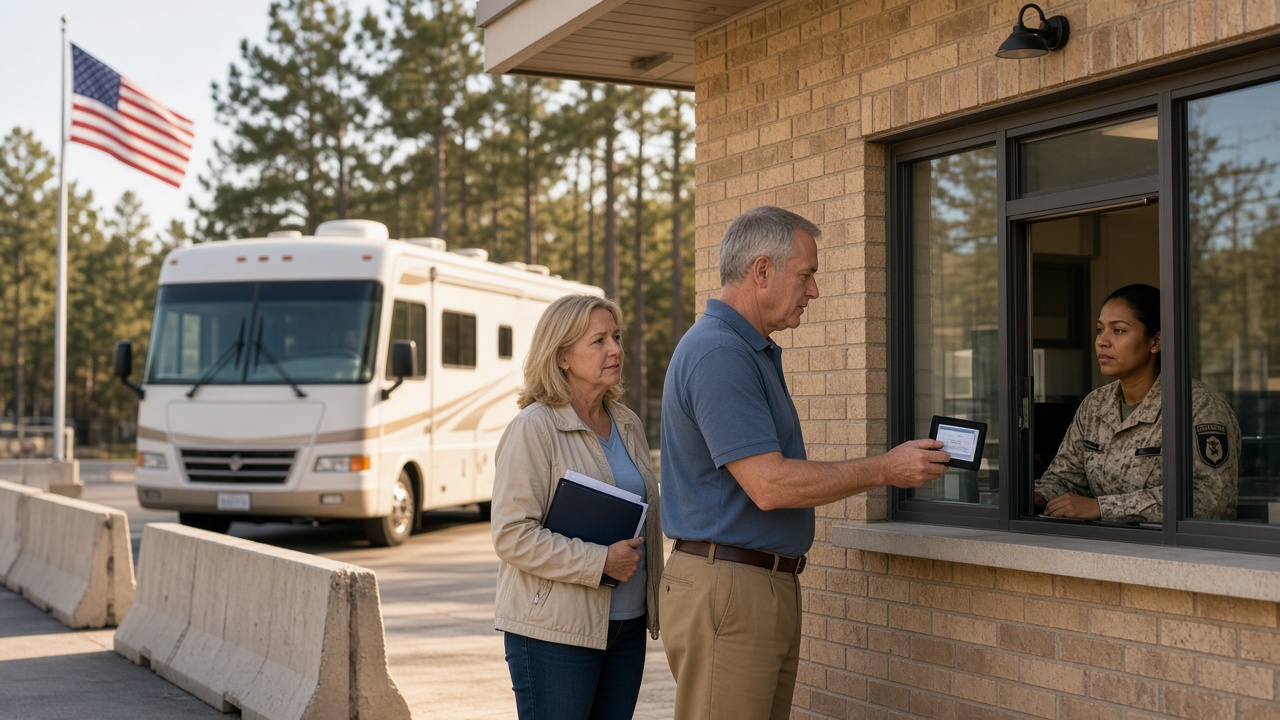
The camp can book your site. Base security decides who gets through the gate.
This is not legal advice. The rules for who can use a FamCamp and who can get on base change with the service branch, the base commander, and the security level.
The short answer
Two separate rules decide this. One covers who can use MWR facilities like FamCamps. The other covers who can get through the gate. Passing one doesn't mean you pass the other, and a yes at one base doesn't guarantee a yes at the next.
Typical eligibility
Most people get in with a CAC, a retiree ID, or a dependent ID. Veterans with a VA service-connected rating qualify too, at any percentage, including 0%. So do Purple Heart recipients, former POWs, and approved VA family caregivers.
Since January 1, 2020, federal law (10 U.S.C. § 1065) has given those veterans and caregivers commissary, exchange, and MWR access, and DoD lists tent sites and RV parks as covered.
You no longer need a VA health card (VHIC) to get through the gate. Since November 1, 2024, you can enroll at the base Visitor Control Center with a REAL ID driver's license, and the base checks your eligibility electronically. The camp office can't check it that way, so bring a printed VA letter that shows your service-connected rating. A DD-214 by itself won't get you in.
Veterans rated 100% can get a DoD ID card instead, which covers more and comes with a card for your spouse. The full walkthrough for rated veterans is in Have a VA rating? You can camp on base.
Bringing your spouse or guests
If your spouse has their own Uniformed Services ID, they show that card at the gate. Active duty members, retirees, Medal of Honor recipients, and veterans rated 100% can get ID cards for their spouse and eligible children.
Anyone else is up to the base. A VA rating below 100% or caregiver status does not give you the right to bring guests, so each base sets its own rule. Some will give your spouse a visitor pass. Others want a Uniformed Services ID for everyone in the vehicle.
Five common situations
You're a service-connected veteran. You can get on, but guests depend on the base.
Call ahead and ask three things. Will my VHIC or REAL ID get me on base? Can I bring a guest? Will they need a new pass every day? You usually enroll separately at each base, and enrollment is typically good for one to three years. Being approved at MacDill doesn't mean you're approved at Pendleton.
The camp booked your site, but your spouse was turned away at the gate.
This happens when the veteran is getting on with a VHIC or REAL ID instead of a DoD ID card and the spouse has no military ID of their own. The camp will take the reservation, but the Visitor Control Center can still refuse your spouse a pass. Saying "they're with me" won't change that.
Everyone in the truck has a DoD ID. You're almost always fine.
Eligibility is rarely the problem. What trips people up is gate hours, which lane oversized vehicles have to use, and how far ahead the camp takes reservations.
A temporary 100% rating still gets a DoD ID.
A permanent and total 100% rating gets you a Uniformed Services ID with no expiration date. A temporary 100% rating gets one too, but it expires 60 days after your next scheduled VA reexamination. Your spouse can get a dependent ID at the same visit. Until you get that card at an ID card office, you can still get on as a service-connected veteran, but your spouse will need a visitor pass.
A few camps are open to the public. Most outside the gate are not.
Allison Point, Valdez Glacier (RV and tent sites), Clay Target Center, Camp Perry, and Admiral Baker take civilian campers. A few others say they're open to the public but still require a visitor pass. A FamCamp being outside the fence doesn't make it public.
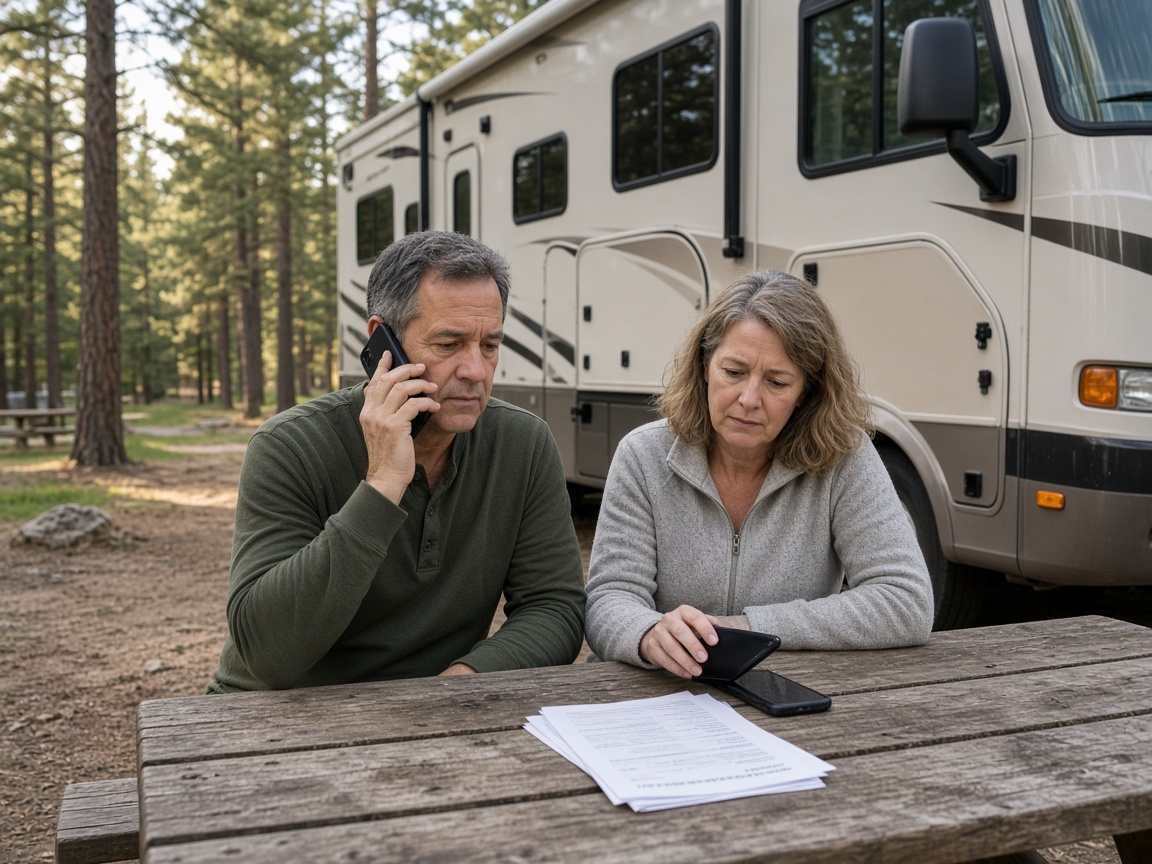
Call the camp office and the Visitor Control Center before you leave, not from the gate line.
The 60-second check
- Open the camp in the VetCamps app and tap Call. Those are the camp office and reservation numbers. Call the office, tell them which ID card you actually have, and ask whether they'll take your reservation this season, who handles gate access, and whether your spouse or guests will need a pass.
- On the same listing, open Gate Access, go to the VCC tab, and tap its call button. That number reaches the Visitor Control Center, which some bases call Pass and ID. Ask how enrollment works, how long it lasts, whether you need a REAL ID, what vehicle paperwork to bring, and whether you can bring anyone with you.
- If the listing shows an eligibility line or says open to the public, use that as a starting point and confirm it on those two calls.
Free on iPhone and Android
Call before you roll.
The camp office handles your reservation. The Visitor Control Center decides who gets through the gate. VetCamps puts both numbers on the listing.
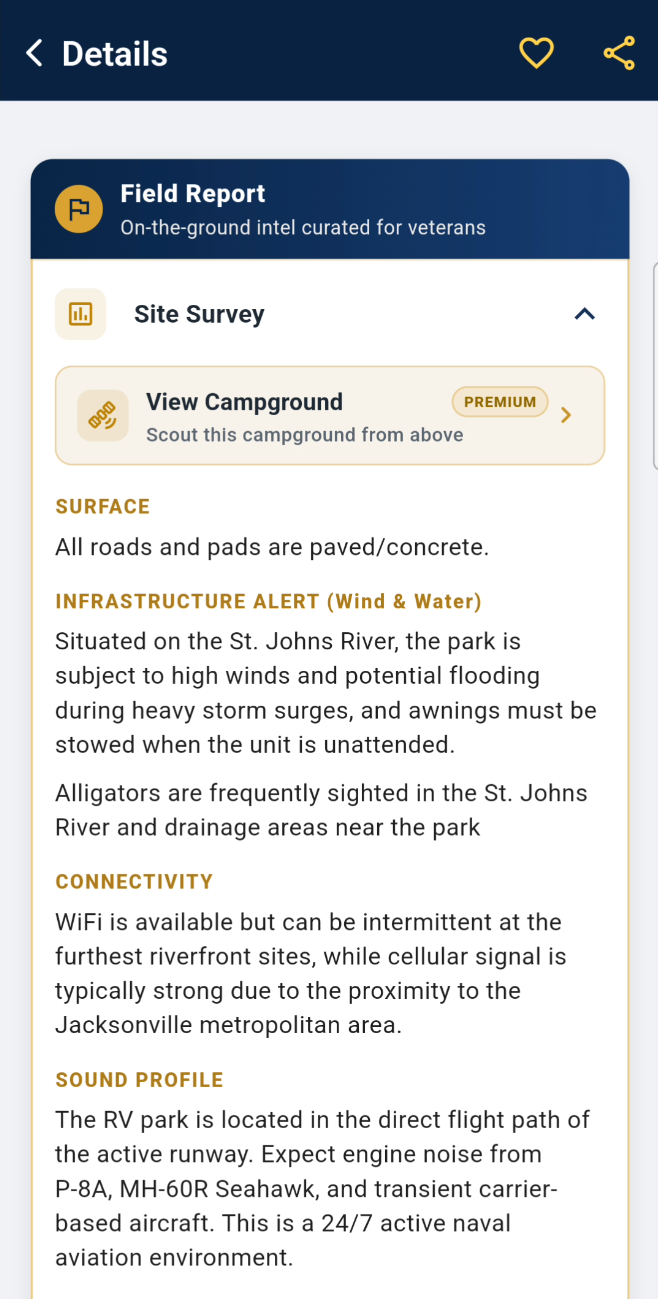
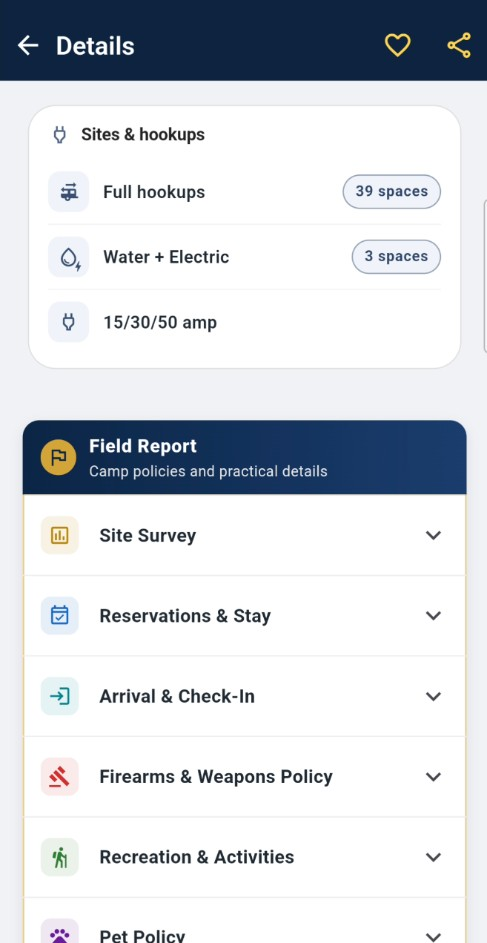
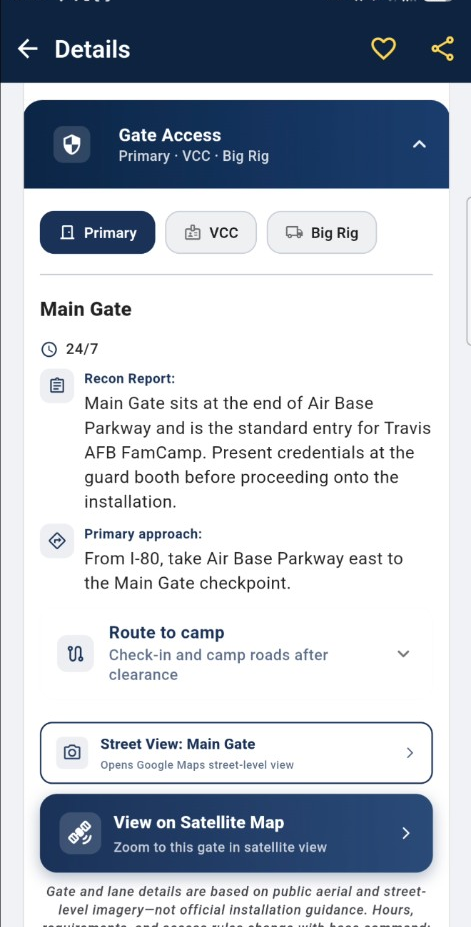
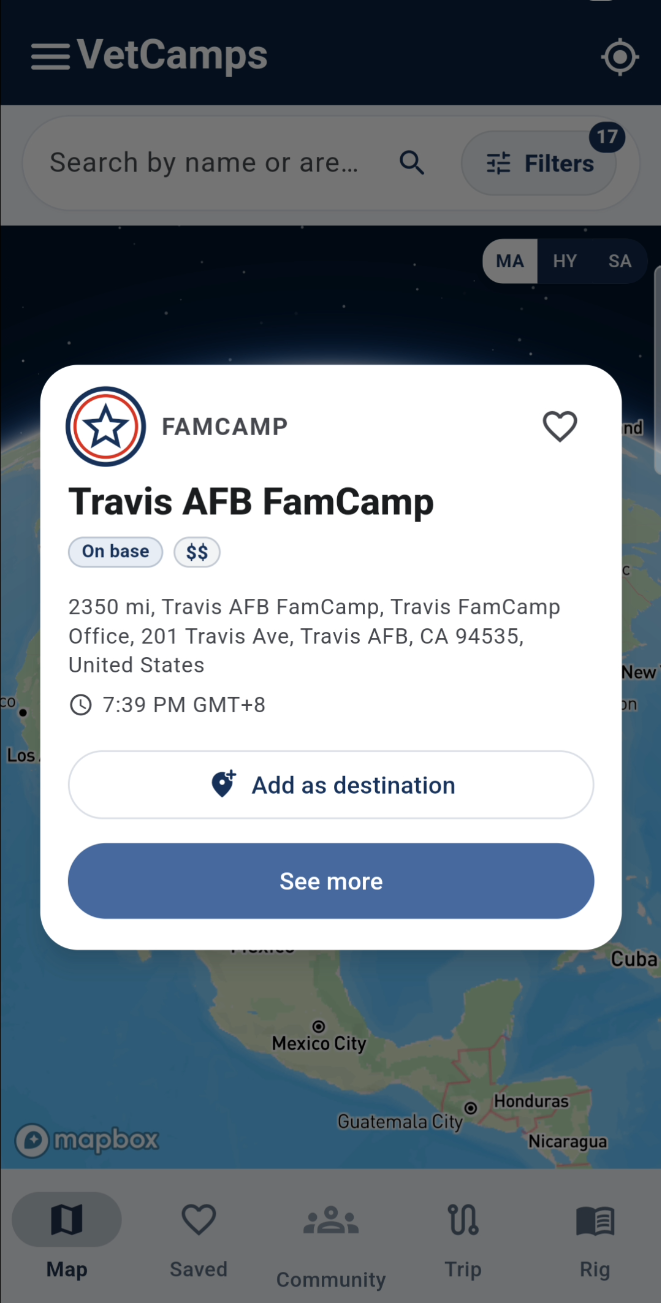
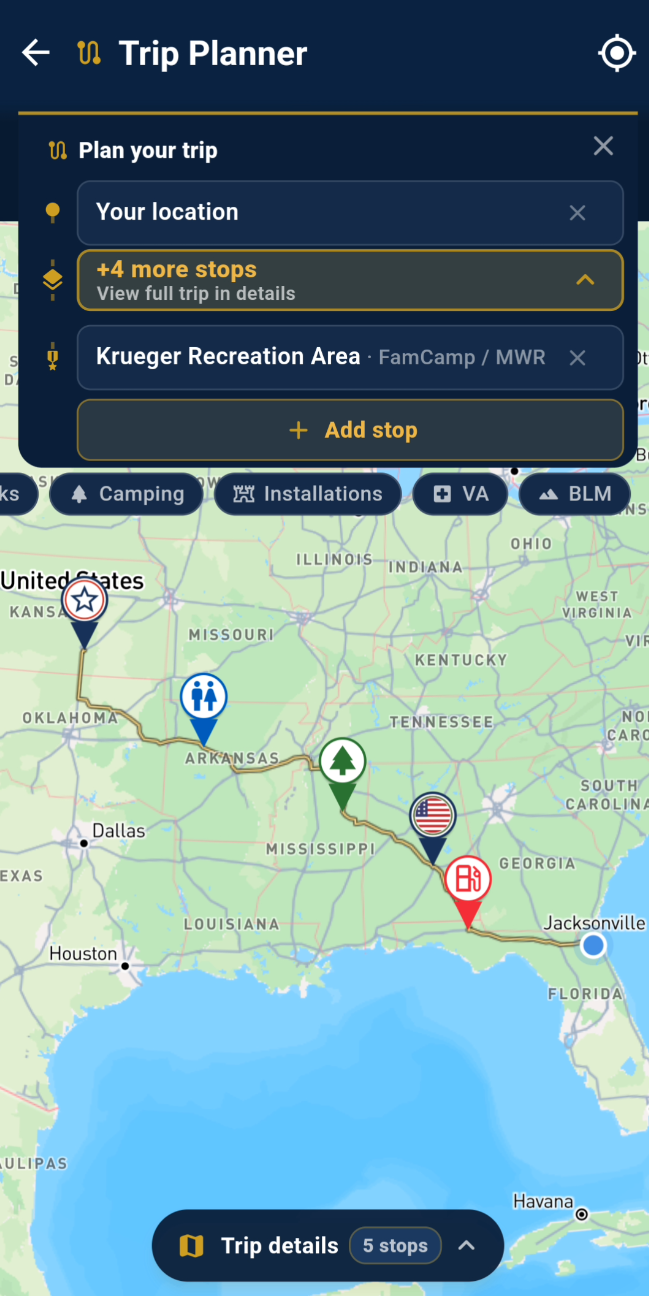 See every screen


Common myths
- "Show the VA card at the gate and you have all MWR, commissary, and the exchange, everywhere." The 2018 law that expanded access is real, but so is the security check at each gate. Being approved at one base doesn't cover every base.
- "Federal law, so the commander cannot say no." The law covers using MWR facilities. It doesn't give a VHIC holder's spouse a DoD ID, and it doesn't override the base's security checks.
- "Just ask the FamCamp." The camp can answer questions about your site. Gate questions go to the Visitor Control Center. They are different offices.
- "Only 100%" or "any veteran." Any service-connected rating counts, even 0%, and so does a Purple Heart or former POW status. An honorable discharge without a rating doesn't qualify.
- "You can always sponsor one guest since 2020." DoD leaves guests up to each base. There is no nationwide guest allowance.
Sources used
- 10 U.S.C. § 1065 (commissary and MWR use for certain veterans and caregivers)
- DoD Manual 5200.08, Volume 3 (installation access: ID, background check, reason for entry)
- DoD / VA installation-access update
- DoD / VA expanded-access FAQ
- VHIC required for in-person access
- VA / DoD installation-access press update
- Army MWR eligible patrons
More field notes in Guides.